
Periodontal Disease in Dogs and Cats: Understanding the Stages of Gum Disease in Pets
You lean in to kiss your dog goodnight and are met with a wave of fishy breath. Your cat still eats like normal, but her gums look a little red at the edges.
It’s tempting to think: “It’s just dog breath” or “She’s old, that’s normal.”
In reality, these are often the first signs of periodontal disease – the most common health problem in adult dogs and cats, and one that can quietly move through several stages before anyone notices. Studies suggest that around 70–90% of dogs and a large proportion of cats show some degree of periodontal disease by the age of 2–3 years, especially small breeds and older animals.
Understanding the stages of periodontal disease in pets helps you catch trouble early, protect your pet from pain, and avoid expensive emergencies later.
Quick answer – what are the stages of periodontal disease in pets?
Vets commonly use a five-stage scale (PD0–PD4) from the American Veterinary Dental College (AVDC):
- PD0 – Normal: Clean teeth, healthy pink gums, no bone loss.
- PD1 – Gingivitis: Red, swollen gums but no loss of attachment or bone yet – fully reversible.
- PD2 – Early periodontitis: Less than 25% loss of tooth support; plaque and tartar under the gumline, mild bone loss – needs treatment and strict home care.
- PD3 – Moderate periodontitis: 25–50% loss of support; deeper pockets, more bone loss, wobbly teeth, pain – advanced treatment or extractions are often needed.
- PD4 – Advanced periodontitis: More than 50% of support gone; very loose or broken teeth, infection, significant pain – extraction and pain control are usually the kindest choices.
Only a veterinarian can accurately stage periodontal disease in dogs and cats, because proper staging needs a full exam under anesthesia plus dental x-rays. At home, your job is to know the early warning signs, understand how periodontal stages in pets progress, and make regular dental checks part of your pet’s health plan.
Why periodontal disease in pets is such a big deal
Periodontal disease is inflammation and destruction of the tissues that support the teeth – the gum, ligament and bone. It starts with soft plaque and mild gum redness and can end with painful tooth loss and chronic infection.
Across epidemiological studies, periodontal disease is described as the most common oral disease in dogs and very common in cats.
If it’s left untreated, periodontal disease can lead to:
- Persistent, often hidden, oral pain
- Difficulty chewing and enjoying food
- Tooth root abscesses and, in extreme cases, jaw fractures
- Bacteria and inflammatory molecules entering the bloodstream and potentially affecting organs like the heart, liver and kidneys
The painful twist: animals rarely “complain” about dental pain. Many pets eat through severe periodontal stages because survival instincts run deep. That’s why understanding the periodontal stages pets pass through – and acting early – matters so much.
The ancestral question: wild animals vs modern pets
Many pet parents ask a very fair question:
“In the wild, wolves and wild cats didn’t brush their teeth or go to the vet. Why does my dog or cat suddenly need dental cleanings and daily brushing?”
This goes right to the heart of the issue – the difference between simply surviving and truly thriving. There are three big reasons modern pets need help with their teeth.
1. The modern diet is different
Wild carnivores spend a lot of time ripping and tearing their food.
- They gnaw on raw bones, hides, sinew and connective tissue.
- This tough, fibrous material has a strong mechanical cleaning effect, scraping plaque as they eat.
Modern pet food, even high-quality options, is built for complete nutrition, safety and convenience – not necessarily for mechanical cleaning:
- Kibble often shatters quickly rather than scraping all the way along the tooth surface.
- Soft foods and many treats can stick around the gumline, feeding bacteria.
So although the nutrition can be excellent, today’s diets rarely provide the same “tooth-brushing effect” that wild feeding behaviour offers.
2. We’ve extended their lifespans
A wild wolf or feral cat rarely reaches the age of your senior house pet. Many die young from:
- Predation and trauma
- Parasites and infection
- Starvation and harsh weather
Periodontal disease is a slow, chronic condition. In the wild, an animal often dies of something else before severe (PD3–PD4) gum disease has the chance to fully develop.
Our pets are different:
- They live indoors or in safe environments.
- They get daily meals, vaccines and medical care.
- Many live into their teens and sometimes beyond.
We’ve done something wonderful – we’ve given them time. But that extra time also allows slow processes like periodontal disease to progress unless we actively prevent it.
3. Selective breeding created vulnerabilities
A wild wolf’s skull and teeth are designed by evolution to hunt, grab and tear. Many modern breeds are designed by humans for a particular look or size.
- Toy and small breeds (Yorkies, Poodles, Chihuahuas) often have as many teeth as a much larger dog squeezed into a tiny jaw. This leads to crowding, rotated teeth and tight spaces where plaque and bacteria thrive.
- Brachycephalic breeds (Pugs, Bulldogs, Boxers, Persian cats) have shortened skulls and altered jaw shapes. This can distort tooth alignment, create deep folds around the mouth and make natural self-cleaning far more difficult.
These genetic changes mean some modern dogs and cats are structurally predisposed to severe periodontal disease in a way their wild cousins simply were not.
In other words:
- Your dog does not eat like a wolf.
- Your indoor cat does not live like a wild hunter.
- Their teeth and jaws may also be very different.
Modern dental care isn’t “unnatural” – it’s part of honouring the longer, protected life we’ve given them.
Plaque, tartar, gingivitis and periodontitis – the basics
Before we look at the official periodontal stages, let’s translate a few key terms into plain language:
- Plaque – a soft, sticky film of bacteria, saliva and food particles that forms on tooth surfaces within about 24 hours after cleaning.
- Tartar (calculus) – when plaque is left in place, minerals in the saliva harden it into a crusty, yellow-brown layer. This rough surface makes it much easier for new plaque to stick. Brushing cannot remove established tartar; professional scaling is needed.
- Gingivitis – inflammation of the gums only. Gums appear red and swollen, may bleed when touched or when your pet chews, but the bone and ligament that hold the tooth are still intact. Gingivitis is reversible if treated in time.
- Periodontitis – deeper infection and inflammation that damages the ligament and bone around the tooth. This leads to loss of tooth support. Periodontitis is not fully reversible; the goal is to stop it from worsening.
Biologically, periodontal disease has two phases (gingivitis and periodontitis), but in practice vets use a five-stage scale (PD0–PD4) to describe how advanced the damage is.
The 5 periodontal stages in pets (PD0–PD4)
The American Veterinary Dental College (AVDC) defines five stages of periodontal disease, based on the amount of attachment and bone loss around each tooth. A single pet can have different teeth at different stages.
PD0 – Clinically normal (no periodontal disease)
- Teeth are clean or have only minimal plaque.
- Gums are pale pink, firm, and fit tightly around each tooth.
- No inflammation, no pockets, no bone loss.
At this stage, your pet’s mouth is as healthy as it can be. The goal is to keep them here for as long as possible.
PD1 – Gingivitis (early, reversible disease)
- Plaque and maybe light tartar sit along the gumline.
- Gums become red, slightly swollen and may bleed when touched or when your pet chews toys.
- There is no attachment or bone loss yet – x-rays look normal.
With professional cleaning and good home care, PD1 can go back to PD0.
PD2 – Early periodontitis
- Infection and inflammation extend deeper into the tissues supporting the tooth.
- There is less than 25% loss of attachment (bone and ligament).
- Vets may find early pockets under the gumline or mild gum recession.
- Dental x-rays show the first clear signs of bone loss.
From the outside, you might notice more persistent bad breath and heavier tartar, especially on the back teeth. PD2 cannot be fully reversed, but with proper treatment we can halt or slow progression.
PD3 – Moderate periodontitis
- 25–50% of the tooth’s support has been lost.
- Gum pockets are deeper, and bone loss is clearly visible on x-rays.
- Teeth may start to wobble; some multi-rooted teeth show furcation involvement (bone loss between the roots).
Many pets with PD3 show:
- Obvious tartar and gum recession
- Dropping food, chewing on one side
- Pawing at the mouth or avoiding games that involve tugging or biting
Treatment often involves more advanced periodontal procedures, and in many cases, extraction is kinder than trying to save a structurally compromised, painful tooth.
PD4 – Advanced periodontitis
- More than 50% of the tooth’s support is gone.
- Teeth are very loose or already missing.
- Infection can extend deep into jaw bone, forming tooth root abscesses.
At this stage, pets may show:
- Extremely bad breath
- Visible pus, heavy tartar and severe gum recession
- Facial swelling or nasal discharge in some cases
- Behaviour changes – irritability, hiding, reluctance to be touched around the face
The kindest and safest treatment for PD4 teeth is almost always extraction, combined with strong pain relief and infection control. Many owners are amazed at how much brighter and more playful their pets become once the constant mouth pain is gone.

What dog and cat parents actually notice – signs by stage
Because most of the damage happens under the gumline, periodontal disease dogs and cats struggle with is often invisible until it’s quite advanced. Still, there are clues:
Early signs (PD1–PD2)
- Persistent bad breath
- A thin red line along the gumline
- Yellow-brown tartar on back teeth
- Occasional bleeding when chewing toys
Moderate signs (PD2–PD3)
- Dropping food or chewing more slowly
- Chewing on one side of the mouth
- Pawing at the face
- Less interest in crunchy treats or chews
Advanced signs (PD3–PD4)
- Loose, missing or broken teeth
- Swelling under the eye or along the jaw
- Drooling, sometimes with blood
- Noticeable change in temperament (grumpy, withdrawn, reluctant to be handled)
If you see any of these, especially in a middle-aged or older pet, it’s time for a proper dental evaluation, not just a quick look at the front teeth.
How vets diagnose and stage periodontal disease
True periodontal staging cannot be done on a fully awake pet that’s wiggling in the exam room. Global guidelines from organisations like WSAVA and practical dentistry articles stress that full assessment requires:
- General health evaluation – bloodwork and physical exam to ensure safe anesthesia.
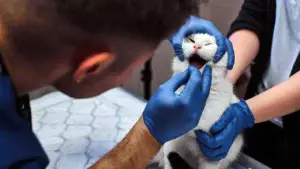
- Oral exam under general anesthesia – allowing the vet to inspect every tooth, including far-back molars and inner surfaces.
- Periodontal probing – using a small, blunt probe to measure pocket depths and detect hidden gum recession or furcation involvement.
- Dental x-rays (radiographs) – to see bone levels, root structures and any hidden abscesses; bone loss cannot be assessed reliably without intraoral x-rays.
Each tooth is then assigned a PD stage (0–4) based on attachment and bone loss. Your vet can show you images and explain which teeth can be saved and which are better removed.
Treatment by periodontal stage
Every pet is unique, but here’s how treatment often lines up with the periodontal stages pets move through:
- PD0 (normal):
- Maintain with daily or near-daily brushing and evidence-based dental products.
- Yearly check-ups, possibly with scaling if plaque/tartar begins to build.
- PD1 (gingivitis):
- Professional cleaning and polish under anesthesia, including under the gumline.
- Start or improve home brushing, plus supportive products (diets, chews, water additives with real data behind them).
- PD2 (early periodontitis):
- Thorough dental cleaning with subgingival scaling and root planing.
- Possible local antimicrobial or antiseptic treatments in selected cases.
- Follow-up schedule and strict home care to stabilise disease.
- PD3 (moderate periodontitis):
- Combination of advanced periodontal therapy and selective extractions.
- Strong pain control and, when indicated, systemic antibiotics.
- Close recheck schedule after healing.
- PD4 (advanced periodontitis):
- Extraction of affected teeth is usually the kindest option.
- Pain relief and infection control are top priorities.
- Soft diet during recovery, then long-term prevention for remaining teeth.
Across all stages, the core principle is simple: remove plaque and tartar, especially under the gumline, and keep it from building up again.
Prevention at home: what actually works
Wherever you live – EU, UK, US, AU – prevention tools fall into the same core categories.
Daily brushing: why “once a day” really matters
The bacterial film called plaque starts to form on tooth surfaces within about 24 hours after they’re cleaned. If it isn’t removed:
- Within roughly 24–48 hours it begins to mineralise into tartar (calculus).
- Once hard tartar is in place, brushing alone can’t remove it. It has to be scaled off by a vet under anesthesia.
That’s why veterinary dental specialists consistently say that once-daily brushing is the gold standard. It physically disrupts the plaque before it hardens.
Daily, or near-daily, brushing:
- Greatly lowers the risk of going from reversible gingivitis (PD1) to irreversible bone loss (PD2–PD4).
- Is far more effective than relying on chews alone, which are best used as a backup, not as a sole strategy.
If daily brushing truly isn’t realistic for your household, aim for as close to daily as you can and combine it with proven dental diets and chews. But from a biological standpoint, brushing every day is what best matches the speed at which plaque reforms.
VOHC-accepted products
The Veterinary Oral Health Council (VOHC) evaluates dental products and awards a “VOHC Accepted” Seal to those shown in controlled trials to reduce plaque and/or tartar. Products with the Seal include:
- Special dental diets
- Dental chews and treats
- Water additives, gels and sprays
- Toothpastes and toothbrushes designed for pets
Looking for the VOHC Seal is an easy way to filter for products with real evidence behind their claims, rather than marketing-only promises.
Diet and lifestyle
- Choose balanced diets appropriate for your pet’s age and health.
- Use dental chews that are size-appropriate and safe (avoid anything that’s harder than teeth).
- Avoid constant snacking on sticky treats.
- Schedule regular veterinary dental checks – at least annually, and more often for high-risk pets (small breeds, brachycephalics, seniors, pets with existing disease).
FAQ – periodontal disease dogs & cats
At what age do dogs and cats usually develop periodontal disease?
Large datasets and veterinary texts suggest that by about two to three years of age, 70–80% of dogs and a substantial proportion of cats have some degree of periodontal disease, with small breeds and older animals at particularly high risk.
Is brushing my pet’s teeth once a day really necessary?
In short: yes, daily brushing is the gold standard of prevention.
- Plaque reforms within about 24 hours.
- If plaque sits for longer than 24–48 hours, it begins to harden into tartar.
- Hardened tartar can’t be brushed off and requires professional scaling under anesthesia.
Daily brushing physically removes plaque before it can harden and is the single most effective way to prevent the progression from reversible gingivitis (PD1) to irreversible bone loss (PD2–PD4). If you can’t manage every day, aim for as often as possible and add VOHC-accepted chews, diets and water additives as backup.
Are “anesthesia-free” dental cleanings a safe alternative?
No. Without anesthesia, only the visible crown of the tooth can be scraped. The disease lives under the gumline and in the bone around the roots – areas that can’t be properly cleaned, probed or x-rayed in an awake animal. Anesthesia-free cleanings can create a false sense of security while deeper disease silently worsens. Modern guidelines favour full anesthetised dental procedures when treatment is needed.
Are cats affected in the same way as dogs?
Yes, cats also suffer from periodontal disease and can develop additional dental issues, such as resorptive lesions. The same principles apply: professional cleanings when needed plus consistent home care with cat-appropriate products.
What about pet insurance and dental care – is periodontal disease ever covered?
In many countries, pet insurance can help with the cost of dental treatment – but the details matter a lot.
Typical patterns across insurers in regions like the EU, UK, US and Canada include:
- Accident-only plans usually cover dental injury only (e.g. a broken tooth after trauma), not periodontal disease or other dental illness.
- Accident-and-illness plans may or may not cover dental illness such as gum disease and extractions; some offer a specific dental illness option that includes periodontal disease, root canals and gingivitis.
- Dental disease that existed before you bought the policy is usually defined as a pre-existing condition and not covered, unless you’re with a rare provider that later covers certain pre-existing issues.
- Routine care, such as annual cleanings, is frequently excluded unless you purchase a separate wellness or preventative package.
If you are considering dental coverage, the safest approach is to:
- Read the dental section of the policy very carefully (look for the words “dental illness,” not just “dental accident”).
- Ask explicitly whether periodontal disease and extractions are covered, and under what conditions (yearly dental exams, age limits, etc.).
- Enrol early in life, before your pet has documented dental disease, so that mouth problems are less likely to be excluded as pre-existing.
Even with good insurance, the most powerful way to protect your pet – and your budget – is still the same: daily brushing, VOHC-accepted products, and early treatment before dental disease reaches the advanced stages.
Is it worth treating severe periodontal disease in an older pet?
Absolutely. Age alone is not a disease. With modern anesthetic protocols and careful monitoring, many senior pets tolerate dental procedures well – and often behave years younger once painful, infected teeth are treated or removed.
Calm conclusion: your next best step
We’ve asked a lot from our pets: to live longer, eat differently and fit into our modern homes and lives. In return, daily dental care is one of the simplest, most powerful ways we can protect their comfort and health.
Key points to remember:
- Periodontal disease is common but not inevitable.
- The earliest stages (PD1–PD2) are where we can do the most to prevent long-term damage.
- Later periodontal stages pets reach (PD3–PD4) are painful and often invisible until the damage is severe – but treatment can still dramatically improve quality of life.
- For periodontal disease dogs and cats already have, the combination of professional cleaning, appropriate treatment and realistic home care is what changes the future.
If you’re unsure where your pet stands, the best next step is simple:
- Book a dental check-up with your vet.
- Ask them honestly, “What periodontal stage do you think my pet’s teeth are in?”
- Work together on a plan that fits your pet, your lifestyle and your budget.
Your dog or cat won’t thank you in words – but they’ll show it in how they eat, play, and live with you in the years ahead.